If you wear glasses every day, they're part of your face. Yet almost nobody factors them in when choosing a haircut. The result: thick frames that crush a flat cut, arms that leave a mark on a fade that's too short, or a fringe that keeps landing on your lenses. Here's how to match your haircut to your frames.
See a cut on my face in 15 seconds
1st simulation free · no signup
Why glasses change everything
A frame adds a strong horizontal line across the middle of your face. It's the first thing the eye notices. Your cut should balance that line, not compete with it. Three areas matter:
- The top: it balances the height of the frame. Thick frames call for a bit of volume.
- The temples: that's where the arms sit. Too short, and you see the arm and the bare skin around it.
- The forehead: a long fringe blocks your view, smudges your lenses and hides the top of the frame.
Matching the cut to your frames
Thick or square frames (acetate, “geek” style)
The frame already has a lot of presence. You need texture and a bit of height so the top of your head doesn't look flattened: a textured crop, a soft quiff, a messy medium cut. Avoid very geometric cuts that add angles to angles.
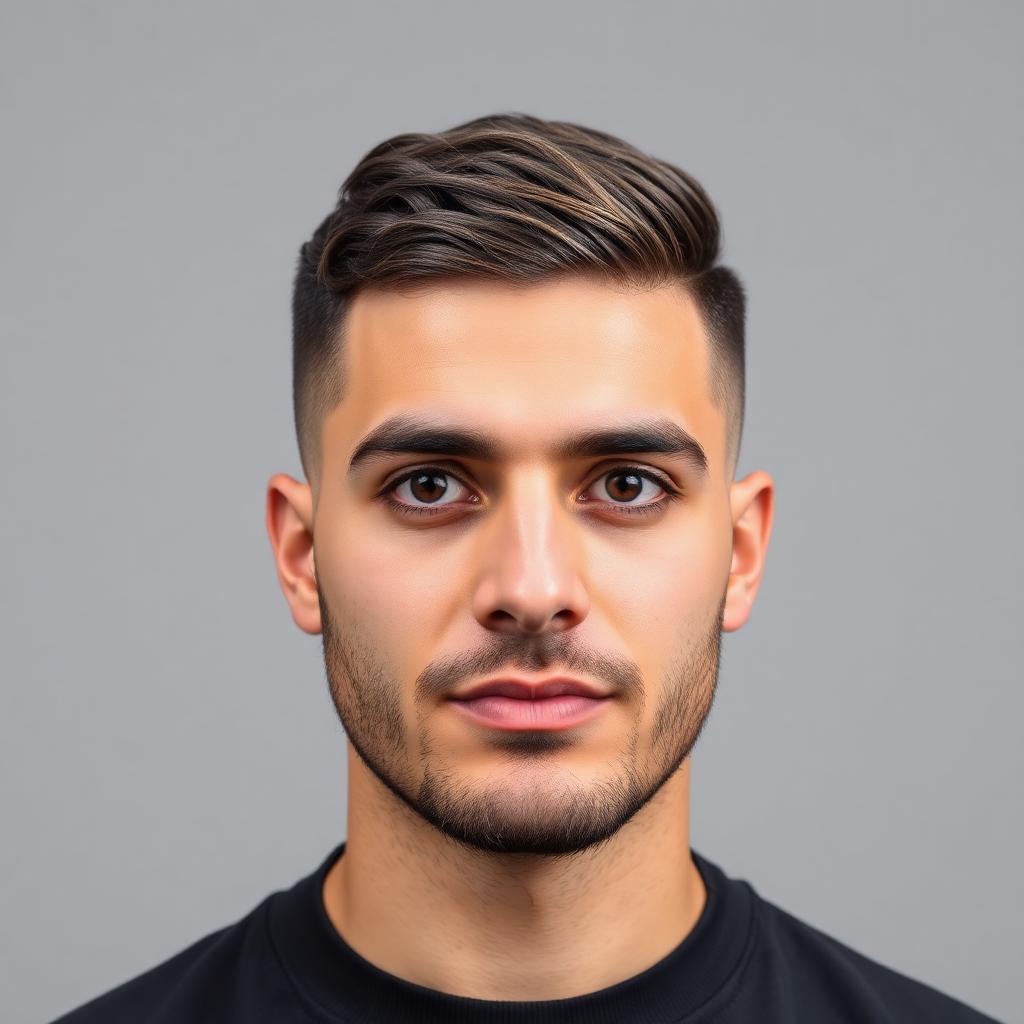
A textured crop with your glasses?
One selfie, 15 seconds · 1st simulation free
Thin or metal frames
The frame is discreet, so the haircut provides the structure. A sharp side part, a clean taper or a well-styled quiff all work well. It's the classic combination for a serious, polished look.

The side part, on your face?
One selfie, 15 seconds · 1st simulation free
Round frames
Round lenses soften the face. A cut with slightly sharper lines (short sides, top combed back or to the side) rebalances it. On a face that's already round, avoid adding volume on the sides.
Rimless frames
Almost anything works, since the glasses fade into the background. Choose your cut based on your face shape and hair texture first.
The arm trap: fades around the ears
Glasses arms rest on top of your ears. With a very high skin fade, they sit on bare skin: you see the arm, the mark it leaves, and sometimes a little ridge of hair above it. Two fixes:
- A taper or a low fade: the neckline and sideburns are clean, but there's still hair where the arms sit.
- If you want a high fade, ask your barber to put your glasses back on at the end to check the line around the ear.
The most common mistakes
- A long fringe touching the lenses: annoying and quickly greasy.
- A very flat top with thick frames: your head looks cut in half.
- Sides longer than the top: the frame makes your face look even wider.
- Getting your hair cut without glasses and never checking the result with them on.
Beard and glasses
A short beard adds a second anchor at the bottom of the face: the frame is no longer the only strong element, and everything looks more balanced. With thick frames, stubble is enough; a very full beard plus heavy frames can be a lot.
What to tell your barber
- “I wear glasses every day, I want the cut to work with them.”
- “Keep some length where the arms sit.”
- “No fringe falling onto my lenses.”
- And bring a picture of the result you want, on your own face.
Test before you cut
The easiest way to know whether a cut works with your glasses is to see it on your own head. With BARBERme, one selfie is enough: pick a cut and the AI applies it to your face in seconds. Try once with your glasses on, once without, and compare.
See these cuts on my face
1st simulation free · no signup
Which cut suits you?
1st simulation free · no signup